The American view of China
The Fall of Communism
With the collapse of the USSR, and China already having gone through several major economic reforms, the overall narrative of the “Red Menace” steadily faded from American society, essentially disappearing entirely by the 21st century. But this didn’t remove China from the concerns of the United States, if anything it just boosted its spot on the list of the American government’s concerns. Because unlike the utter collapse of the Soviets, China was still fundamentally the same entity, just with some economic reforms that made it distinct enough from truely Marxist communism to experience its issues.
From Paranoia of Ideology to Paranoia of Espionage
China had been involved in spy activity with the United States in some form or another essentially as long as they had existed, but as mentioned previously, they were considered somewhat as a secondary concern to the USSR. But things had changed in those fifty-odd decades, as China had a keen interest in uncovering whatever they could from America largely as a means of being able to utilize classified foreign technologies to speed up their own technological prowess. This did not go unnoticed by the government, and suspicion began to take a much stronger hold in national security.
In 1999, an incident would occur with a scientist working at the Los Alamos National Laboratory, with the U.S. government suspecting scientist Wen Ho Lee of stealing critical American nulcear secrets for the purpose of selling or otherwise providing to China, and would be detained for government trial. It would turn out that the government had wrongfully accused Lee of these actions, and after nine months of solitary confinement the government’s case against Lee would falter, and he would pleed guilty to lesser charges of merely mis-handline sensitive information, resulting in the following fifty-eight felony charges being dropped and Wen Ho Lee being released.1 The Federal District Judge in the trial James A. Parker would personally apologize to Lee, stating his belief of the government mis-using the court in this regard.

Wen Ho Lee being led by FBI agents after his arrest for the charges under suspicion of downloading and distributing classified material.
This, of course resulted in much public outrage over the whole matter, and soon the general public began to suspect some very deep flaws within the FBI and Federal government. Specifically, it gave many the suspicion to matters of racial profiling done during the investigation and an overall poor treatment of what should have been a naturalized citizen. Many suspected the main crux of investigation’s mistrust of Wen Ho Lee specifically coming from him being a Taiwanese-American, thus prompting the misgiving of beliefs that he might have some affiliation with the Chinese. In the eyes of the public, this only served to solidify the idea of the perpetual foreigner.
Taiwan Remains An Issue
In a related matter, Taiwan would continue to be an issue on the world stage regarding diplomacy with China. Even though the people involved in the matter had all long-since passed away, new developments were now the main reason for all the foreign interest, specifically due to the fact that Taiwan is home to the single largest production of microchips in the world. From consumer products to military hardware and high-tech government equipment, the vast majority of its production here in the United States is dependant on that production in Taiwan. So, it would only make sense that China would like to get their hands on it. Due to their diplomatic past they already don’t recognize Taiwan as an independant nation, labelling it as a “rogue province”, so for anyone else who agrees with that sentiment it wouldn’t be too hard to justify an aggressive takeover. In addition to this it would also severely handicap American production of technological goods if the ever were to somehow get their hands on it.
This puts it in a very clear-cut position for most Americans: Taiwan remaining an independent nation outside of the control of China is an absolute must. Some view it as a key strategic resource in its production of the microchips, others vehemantly defend Taiwan purely because of their distaste for tyranny, but outside of a very select few, the American public largely agrees on this matter. A humorous result of which being the sheer number of instances dediicated to mocking China, or rather the Chinese government in particular, with people doing so out of a very concerted distaste for their leadership.
China and Social Media
The American public’s sour attitude towards the Chinese government is only increased through it’s often poorly recieved presence on the internet. More often this comes in the form of dedicated propoganda accounts whose sole purpose is to scour the web trying to sow as much dissent against America as possible, but most of the time these are brushed off with the annoyance of a pestering fly, although a few choose to engage in arguments specifically in the hopes of angering or outraging whoever happens to be on the other side of the screen.

An image taken of the infamous formal apology video by John Cena.
But on rare occaision, this extends to particular individuals within the realm of social media. The most infamous and relatively recent example of which being the case of former wrestler John Cena, who was participating on Chinese social media platform Weibo when he accidentally referred to Taiwan as a country, prompting strong backlash from the Chinese government due to their aforementioned lack of recognition for Taiwan’s national status. Cena would soon after release an apology over the matter, which was satisfactory to Chinese parties but absolutely torched his reputation with regards to his American audience who viewed the apology as an act of pathetic groveling and caving to the demands of the Chinese market. Today for a large amount of the youth on the internet, John Cena’s legacy largely consists of his stint on Chinese social media and the disasterous apology, rather than his glory years as a part of the WWE.
Another point of contention revolves around the extraordinarily popular social media app of Tiktok, which was previously owned by Chinese parent company ByteDance. While most pay no mind to the app, during its hayday there were two main camps of detractors, the main of which largely detested it for the content it produced being considered far too short and generally representing a much lower quality standard of internet media. This group remains the largest critics of the app, although public sentiment seems to have calmed in this regard. The second camp was far more concerned with Tiktok being owned by a Chinese company, which to them carried the implication of data collection on a vast number of citizens and specifically the American youth. These opinions had enough contention that the American government intended to ban the website in August of 2020 via executive order, however ByteDance would sign a transaction deal which would relinquish majority ownership to American companies while retaining a maximum share of just under 20%, the legal limit.
“MADE IN CHINA”
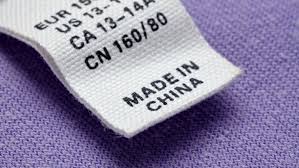
Another social stigma that stands out in the modern era is that of Chinese-produced goods, with the phrase “made in china” being regarded in infamy by most. This is largely due to the Chinese market putting a great deal of emphasis on fast and cheap production to produce as much as possible for as little cost as possible, the result being a mass of products generally seen by most as sub-par in quality and generally considered the cheap option. This reputation also tends to extend to major Chinese companies like Temu, Alibaba, and others, with these names and the “made in china” phrase often used as derogatory slang or in a comedically degrading fashion, often implied as being synonymous with terms like “bootleg” or “dime-a-dozen”.
The Damage of Covid
An unfortunate side effect of Covid’s origins is the damage it caused not just between the American public and the Chinese government, but with the common Chinese citizen as well. In the wake of Covid, and to some extent the aftermath as well, some of the less-well-informed American public would make the outrageous assumption of any potentially Chinese-related individual of having the disease, and either accused unknowingly spreading or in some cases suspected of intentionally spreading the pathogen. A few cases of these incidents have been recorded and posted to the internet, with some Chinese-Americans making an active effort to try and rectify this mess of erronius assumptions. Once again, these ideas are likely spurred by the ever-lingering stereotype of the perpetual foreigner.
The story of the American public’s opinions, depictions, and assumptions of China is a very long and convoluted one, spanning over eight decades and covering several major political and cultural events. One can only wonder what the future holds.
-
U.S. Congress. “The Wen Ho Lee matter”. Washington: U.S. G.P.P., 2001. Pg. 1-11. ↩