Evolving Standards in the 80s and 90s
Evolving Standards in the 80s and 90s
Beauty in the 80s
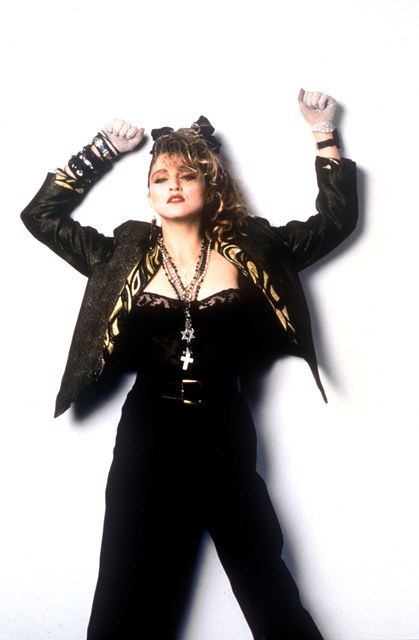
Madonna in one of her iconic outfits of the 80s
By the time the 1980s rolled around, fashion and beauty had changed once again for American women. Now, with a hyper-capitalist society on the horizon, “The young urban professional - or yuppie - was the archetype of the moment.” [^source1] This meant that what was in fashion was the top of the line. From designer labels like Gucci and Yves Saint Laurent, if it was the highest of fashion, it was the thing to own. This translated nicely into the cosmetic industry as well. Sales had been decreasing with the rise of the au natural hippies, but now? With things being more about consuming than ever, “makeup was now a necessary step in women’s daily routines and not one that they felt comfortable scrimping on or going without.” [^source2]
With this in mind, whole books targeted women about their skin care, makeup, and fashion. One such book, titled Easy Glamour: The Black Woman’s Definitive Guide to Style and Beauty, recommends different hair removal methods, explains how to target acne, and even teaches women of color exactly how to apply their makeup in the most flattering fashion of the time. 1 Malls becoming hotspots for teens and young adults also lended itself nicely to the growing culture of consumerism. MTV was effectively an advertisement for different subcultures, too, from Cyndi Lauper to Madonna to Joan Jett. Each woman on MTV had a different aesthetic, and teens and young adults naturally followed suit.
Beauty in the 90s
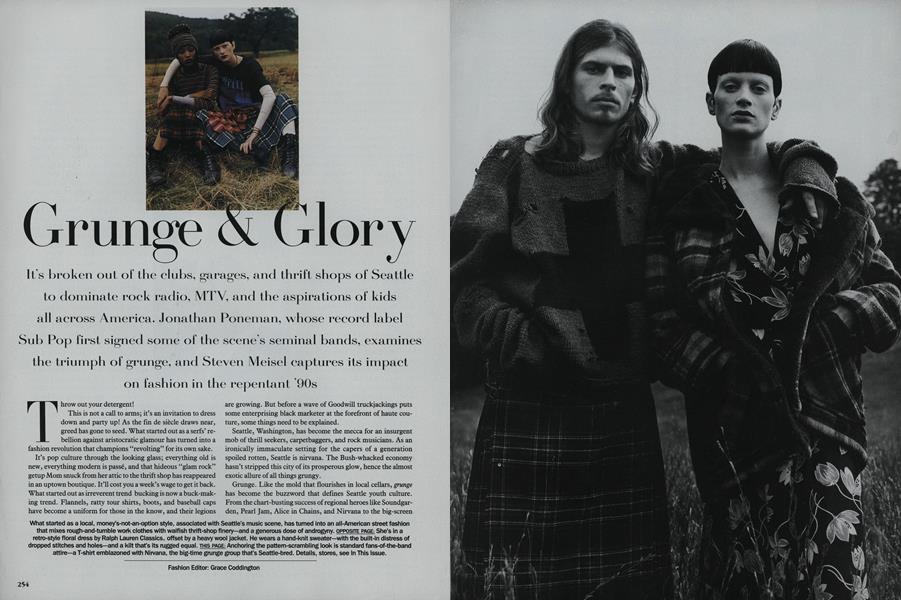
Vogue, December 1992
In the 90s, away was the yuppie and in came the grungy Riot Grrls. Grunge was all the rage, made popular by Nirvana, Hole, and the it-couple of the time, Courtney Love and Kurt Cobain. Grunge was heavily associated with DIY (do-it-yourself) culture. While more subtle than 80s punks, dark makeup was still the way to go. Vogue magazine of the time even started an article with “Throw out your detergent!” [^source4] in a playful poking at grunge’s mostly greasy and dirty look. This was the time to dress down, to fight against the yuppies of the past who wore designer clothes. This was the time of Doc Martens boots and flannels. With the aforementioned Riot Grrl aesthetic on the rise, women could add traditional femininity to their grunge-based looks. Courtney Love was the face of this subculture, and her fashion is still iconic to this day.
However, this was also the time of Heroin Chic. On the cover of magazines now were models who appeared close to emaciated with dark circles under their eyes. Heroin chic has been criticized by many for glamorizing drug use and eating disorders.
Club Kids and Queer Beauty
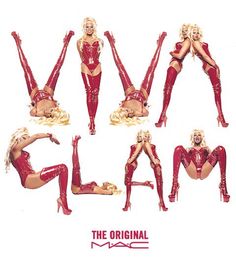
RuPaul, MAC Viva Glam Campaign, 1993
Around this time, as well, drag emerged on a bigger platform than ever, and the Club kids were part of this movement. RuPaul Charles released his first hit song, ‘Supermodel (You Better Work)’, in 1993. He quickly rose to a household name and was the first openly gay, Black, queer spokesmodel for MAC, with the Viva Glam lipstick campaign. The campaign worked to raise money for AIDs research and would later become a challenge on Charles’s TV show that would premiere in the 2000s, RuPaul’s Drag Race. When the campaign launched, Charles told reporters, “I’ve been wearing MAC for five years now and look at me—I’m a big, old Black man under all this makeup, honey, and if I can be beautiful, so can you.” [^source5]
Conclusion
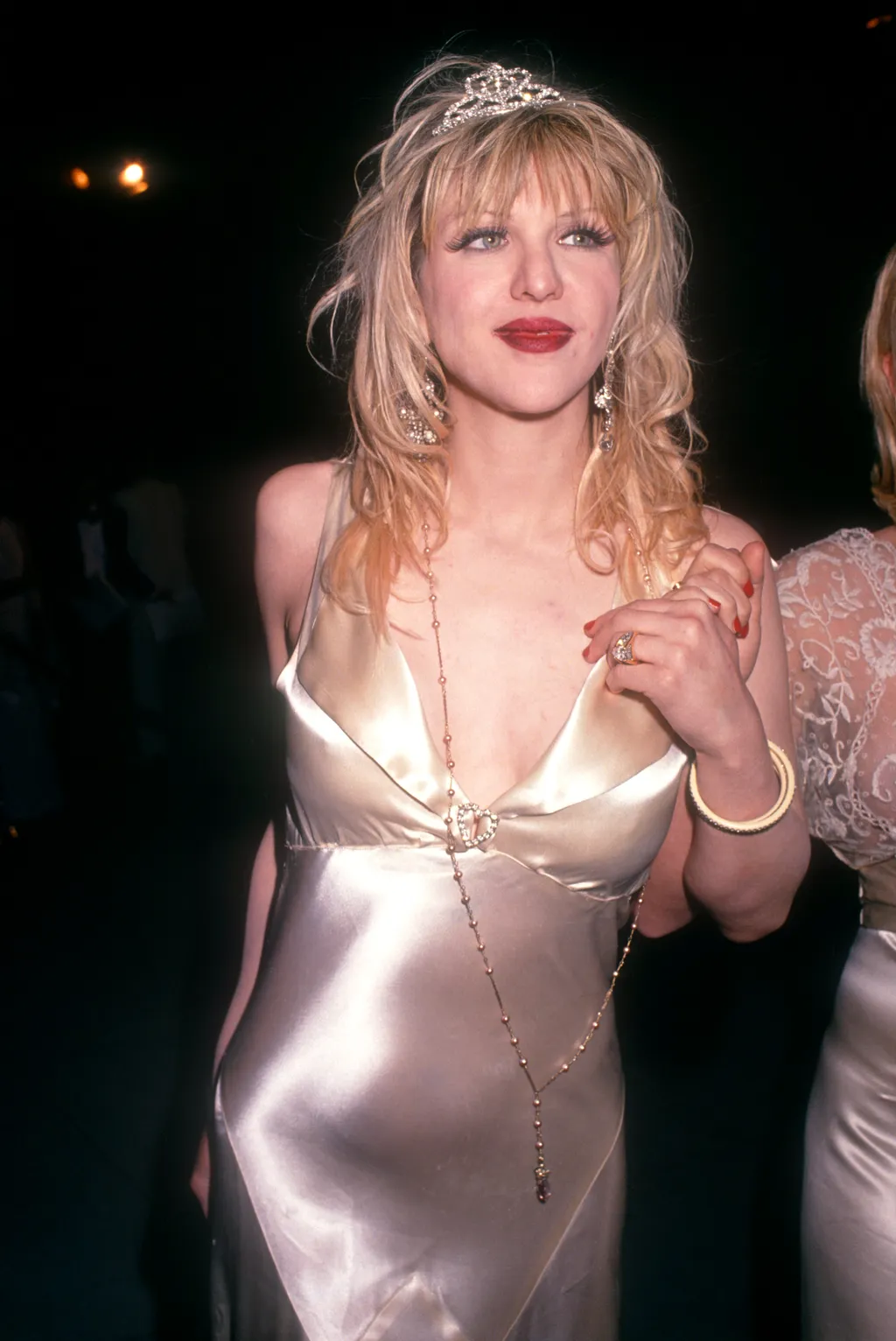
Courtney Love embodying Riot Grrrl Fashion
The 80s and 90s, while appearing very different on the surface, were more similar than one may initially believe. They both had consumerism at their very core. While the 80s were more blatant about this with the rise of designer clothing and makeup, the 90s were celebrity-focused. Even with Riot Grrl and DIY Grunge being so popular, so too were supermodels. Makeup artists were lauded, and many wanted to emulate their flawless-looking makeup looks. These high-end makeup artists are the gap between the 80s and 90s that many do not recognize. Underneath the haze and grunge of the 90s were supermodels who were so skinny you had to wonder what they ate, and celebrity makeup artists selling top-shelf cosmetics in every magazine.
-
Walden, Barbara D, and Vicki Lindner. 1981. Easy Glamour. New York: William Morrow and Company, Inc. ↩