Poverty and Government
Poverty and Government
Not all of these songs focused on narrow, specific subject matter. Some of them took a wider scope of issues in society, that transcend specific administrations or policies.
4 Non Blondes (1992)
.
About the Artist
4 Non Blondes was formed in 1989, and was comprised of Linda Perry, Christa Hillhouse, Dawn Richardson, and Roger Rocha. The band only released one album, “Bigger, Better, Faster, More!”, though they did release several singles. Dear Mr. President was released as a single and also included in their album.1 The band disbanded two years after releasing their first and only album, but as of 2025 have planned a reunion.12
About the Song
This song is generally about the problems of government and wealth inequality. It lays the blame on leadership, stating “it’s such a wonderful country, but the man, he’s burning it down” though it does not specifically name any presidents directly. The song makes mention of several contemporary issues, such as poverty, crime, and the crack epidemic.
Some thought that the song was a critique of the Bush Administration, and in Texas, they had trouble getting the song to be aired as a result.1 According to Christa Hillhouse, however, the song was not aimed at any specific leader, but rather a song about “the hierarchy of power and government”.1
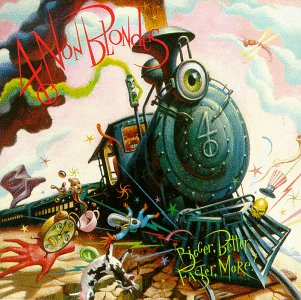
Album cover by Mark Ryden.
Fitz and the Tantrums (2010)
.
About the Artist
Fitz and the Tantrums formed in 2008, and often perform indie pop and neo soul music. They place a lot of emphasis on DIY as well, as Michael Fitzpatrick says “We did our whole record in my living room to see how great of a sound could we come up with, doing it with a do-it-yourself approach.”3
About the Song
This song was released as a part of the album, “Pickin’ Up the Pieces”, and was the first full length album by the band. It focuses on the struggles of people in poverty, and how people are often unable to access necessities or receive help to improve their situation. Similarly to the song by 4 Non Blondes, it is not very specific in its critique, aiming at the larger problems of society rather than specific policies or figures. It addresses similar contemporary issues, including poverty and drug use, and calls on the president to help with these problems.
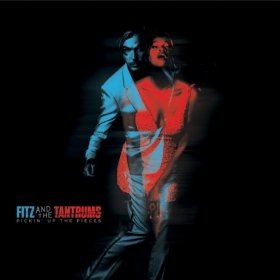
By Dangerbird. May be found at the following website: https://www.amazon.com/Pickin-Up-The-Pieces/dp/B004GB4EZQ/ref=sr_1_2?ie=UTF8&qid=1303005868&sr=8-2.
Comparison
Despite the gap in time between these two songs, they are fairly similar in the broad critiques, as they note issues of poverty and governance that are not tied to any particular event or administration. There aren’t many specific arguments or calls to action in these songs either, primarily arguing that the current state of affairs is not good. This highlights the way that political messages in popular media are not always very detailed, and may not necessarily be written with a specific goal in mind.
The concerns that both songs focus on stem from a societal shift in the role of government that occurred roughly during the Reagan administration. The growth of individualist ideas in society, the myth of the welfare queen, and the reduction of social programs led to worsening conditions for those in poverty, and greater inequality.4 Though these songs are not directly addressing the causes of these issues, they reveal the way that the impact of these is felt throughout society, and how people are affected by them.
These songs are considerably less pointed than many of the others discussed as well, which may also reveal something about the perspectives of the artists, or how they felt their message would be received by the public. One interesting event that relates to this topic is an event involving the band now known as The Chicks. After their criticism of Bush and Iraq War, they received significant backlash, as many boycotted their music.5 This may have impacted some of the presentation of Fitz and the Tantrum’s song, as a fear of backlash may prevent more pointed critique. However, the 4 Non Blondes song released much earlier than this, and thus could not have been affected by it directly. It is also possible that the song represents their attitudes accurately, thus revealing how the less politically involved populace thought about these changes in society.
-
Carl Wiser. “What’s Going on? The 4 Non Blondes Story : Song Writing.” Song Meanings at Songfacts, December 16, 2025. ↩ ↩2 ↩3 ↩4 ↩5
-
George Varga. “Linda Perry Revs up with 4 Non Blondes Reunion, New Film and Solo Album,” Tribune, May 14, 2025. ↩
-
Jane Jansen Seymour. “Fitz & the Tantrums Keep Busy Over the Holiday Weekend”. PopMatters, June 1, 2010. ↩ ↩2
-
Sheldon Danziger, and Robert Haveman. “The Reagan Budget: A Sharp Break with the Past.” Challenge 24, no. 2 (1981): 5–13. ↩
-
Andrew Dansby, “Fans Turn on Dixie Chicks,” Rolling Stone, June 25, 2018 ↩