The Middle East in American Media: How Western Portayal Created a Cultural Enemy
Overview
Following the terror attacks of September 11th, 2001, the eyes of the western world were fixed on the group responsible—the Afghanistan-based Al Qaeda. At first, American ire seemed to be concentrated on Al Qaeda, but dramatic shifts in U.S. military efforts weaponized this negative attention towards the entire region. Americans seem to now define the Middle East exclusively through contempt—drawing the cultural borders around nations that have negative sentiment associated with their people, not by any reasonable geographic analysis.
Unfortunately, this willingness to extrapolate regional hatred from the works of individuals defined American perception long before 2001. The United States has, in the last century, created a media landscape that heavily demonizes the Middle East. While the cultural backlash towards the region has become much more significant in the 21st century, negative western portrayals from the Cold War planted the seed. If it weren’t for vested American interest in making the Middle East look radical, backwards, and amoral, the U.S. would have likely seen a much less pronounced cultural response to 9/11. Blaming small groups (and even their immediate connections) is expected after a significant terror attack—but the outsized reaction to the region as a whole (including nations that would have not been considered “Middle Eastern” otherwise) indicates a pre-existing bias.
The American inclination towards hatred can be primarily attributed to how Western powers portrayed the Middle East between 1945 and 2000—laying the groundwork for the most significant influx in ethnic hatred in this century. Through an analysis of timely primary sources, I have attempted to identify inflection points conerning Middle Eastern portrayal in American film1, which has been heavily influenced by regulatory authorities2. Other kinds of prestige media was also used, with the overall goal of determining why Western attitudes have turned against the Middle East, using academic literature to center specific inquiries.
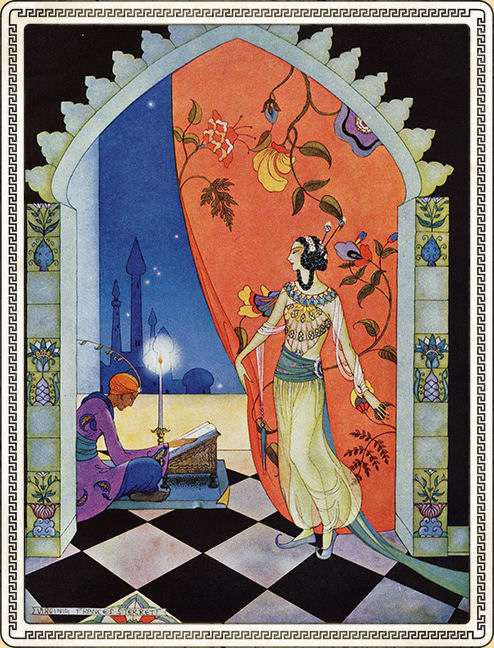
Middle Eastern culture provided many of the ideals used in building the American Dream.
-
Bettwy, Samuel W. “Evolving Transnational Cinematic Perspectives of Terrorism.” Perspectives on Terrorism 9, no. 2 (2015): 42–60. ↩
-
Mirrlees, Tanner. 2017. “Transforming Transformers into Militainment: Interrogating the DoD-Hollywood Complex.” American Journal of Economics and Sociology 76 (2): 405–34. ↩