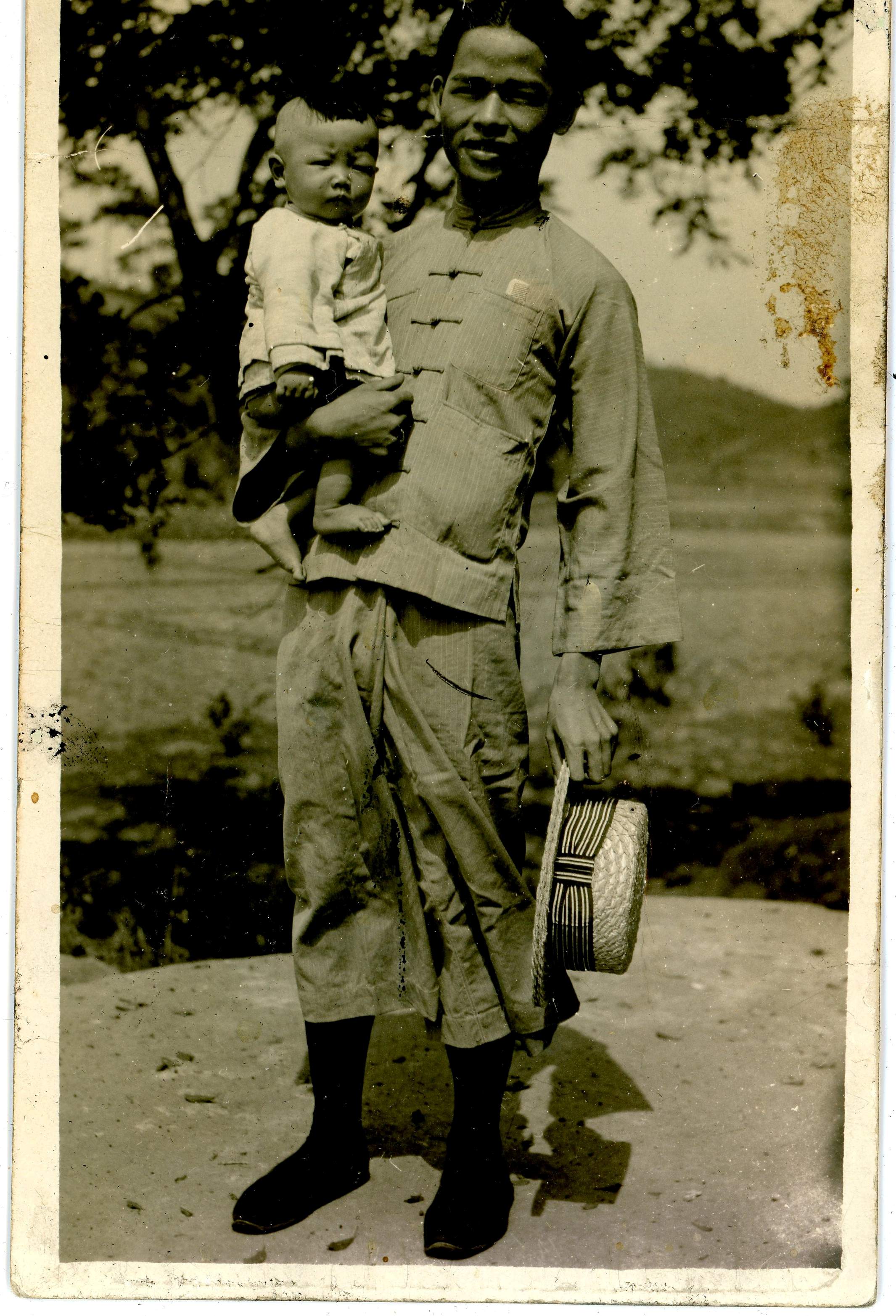
Chinese living in the southern Guangdong Province knew the United States as “Gold Mountain.” Chinese immigrants recalled being told that they could harvest gold off the streets. While no such gold was to be found, thousands of Chinese beginning in the 19th century sought passage to the US in search of wealth. In Fall 1929, my maternal grandfather Wing Ak Fong and his four brothers left Sook Wall village for the United States to make new lives for their families. Initially prevented from becoming a U.S. citizen due to Chinese Exclusion laws, my grandfather began a laundry on the West Side of Chicago. He would support additional family and village members’ chain migration to the States, raise his eight surviving children in the back rooms of the laundry, and continue to run a laundry until the city forced him out of business.
A Radical Attempt to Conserve
My grandfather’s decision to migrate to the United States with his brothers followed a tradition of chain migration from Taishan County in Guangdong Province that began in the mid-19th century. Villagers throughout Guangdong Province in Southern China faced higher costs of living due to international pressures on the Qing Dynasty. Great Britain’s gunboat diplomacy overpowered China during the Opium Wars, and European powers demanded access and exorbitant financial penalties. Chinese peasants had to contribute more of their crops to landlords in order to satisfy heavier taxes; a series of natural disasters exacerbated this burden. This motivated what historian Jon Gjerde describes as “a radical attempt to conserve” (Gjerde 1998, 96) a traditional way of life: making the radical decision to leave one’s homeland in hopes of saving that traditional way of life. Chinese with resources paid their way to North America; Chinese lacking resources indentured their labor in exchange for passage to work on plantations in Latin America or the Caribbean. My grandfather’s family however was not a peasant family; they did not farm. Nonetheless immigration itself created new economic trends in Taishan by the early 20th century that encouraged outmigration.
By the early 1900s, the funds sent home by Chinese emigrants in turn inspired more outmigration. These remittances also created greater pressures for younger men to migrate to earn wages in order to keep up with the increased cost of land and goods. Geopolitical developments by the 1920s also contributed to a desire to migrate. Japan had undergone concerted modernization modeled on Western imperialism, and sought to expand its influence across Asia, including the colonization of Korea in 1911.
Subheader 2: Personal context (4-8 words)
My grandfather’s departure for the United States resulted in a separation from his wife, See Chew, for 5 years. This was not uncommon for Chinese migrants.
Paragraph 3 (150-200 words). Draw from your oral history to explain the personal reasons for your family’s movement. What were the personal push factors (motivations to leave)? Were there any personal pull factors (motivations to move to a particular destination)? Was there any evidence of chain migration (family/community connections that provided support, jobs, familiar culture)?
Listen
10-25 words: who is speaking, what they describe, and a citation. Interview by Your Name, City, Month Day, Year.
Use a sentence or two here to introduce the clip and say why you chose it.
Subheader 3: Describing the oral history as a whole
Paragraph 4 (300-350 words). Describe the journey as a whole: the family, one important object, and questions of identity and place. Where did your family end up, and how did they make it home? Which object carries the story, and what does it mean to them? Draw on your oral history and cite it.
Subheader 4: Connections to other migration stories
Paragraph 5 (125-175 words). How does your family’s story compare with the migration stories we studied in class? Name specific similarities and differences, and cite the class materials you are drawing on.
Concluding subheader of your choice
Final paragraph (70-85 words). Reflect on what you learned about your family, about migration, and about U.S. history by doing this project.
References
Primary sources
Last name, First name. Oral history interview. Interviewed by Your Name. City, Month Day, Year.
Secondary sources
Gjerde, Jon. Major Problems in American Immigration and Ethnic History: Documents and Essays. Houghton Mifflin, 1998.